Classical Indian Dance
Program
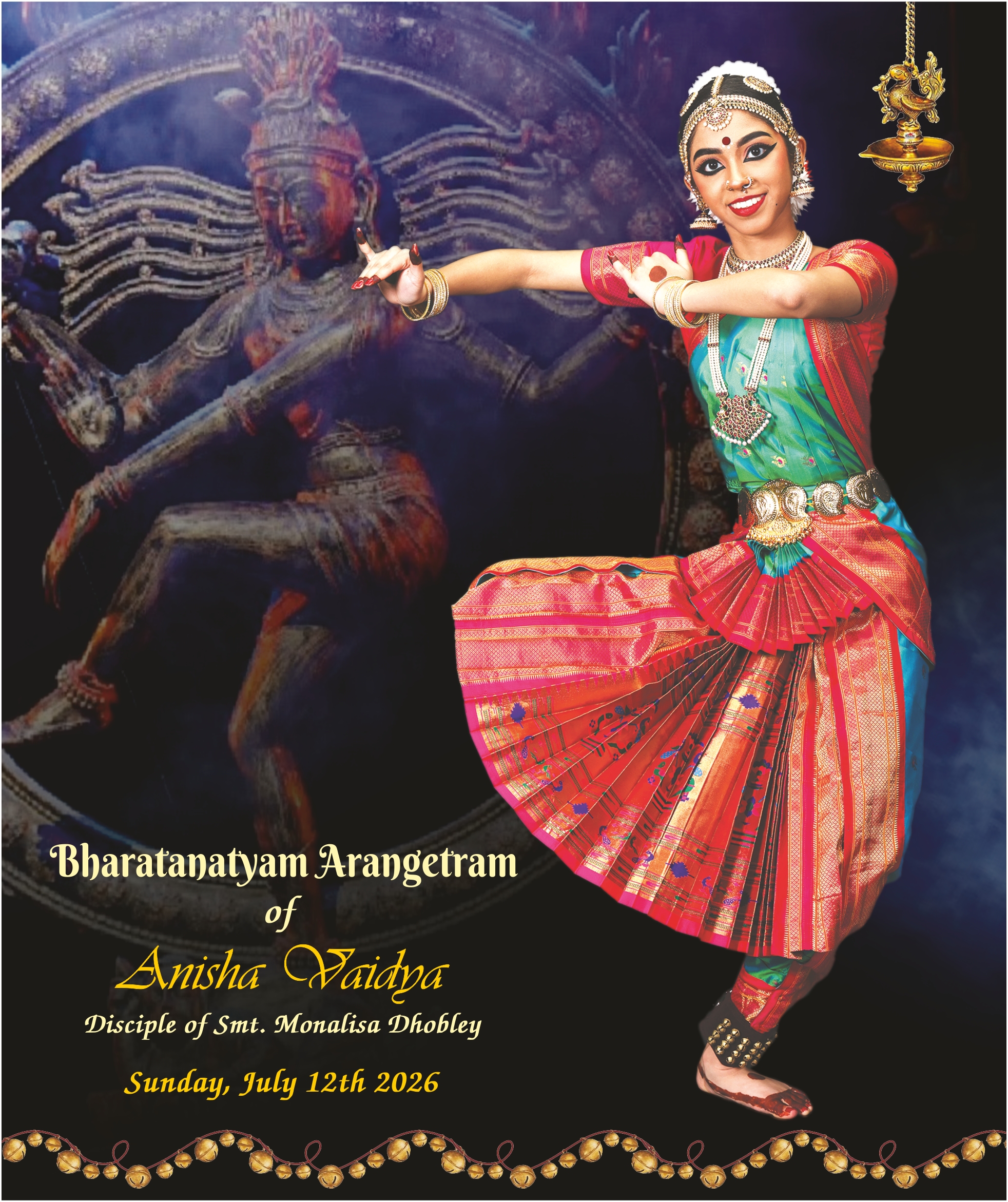
A classical Bharatanatyam Arangetram presentation by Anisha and Mihika
Brochure
1 / 6
Dance Items
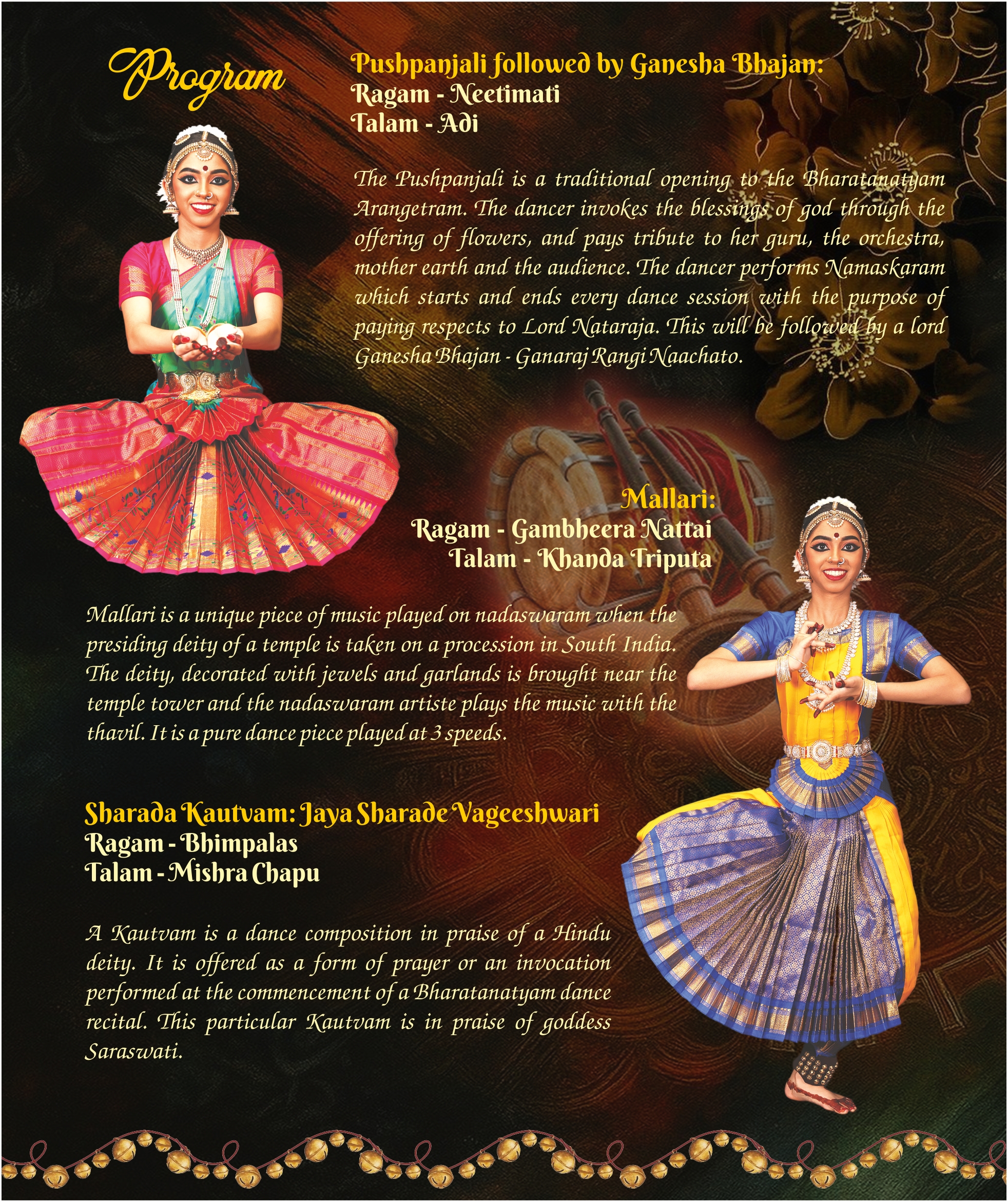
Pushpanjali & Ganesha Bhajan
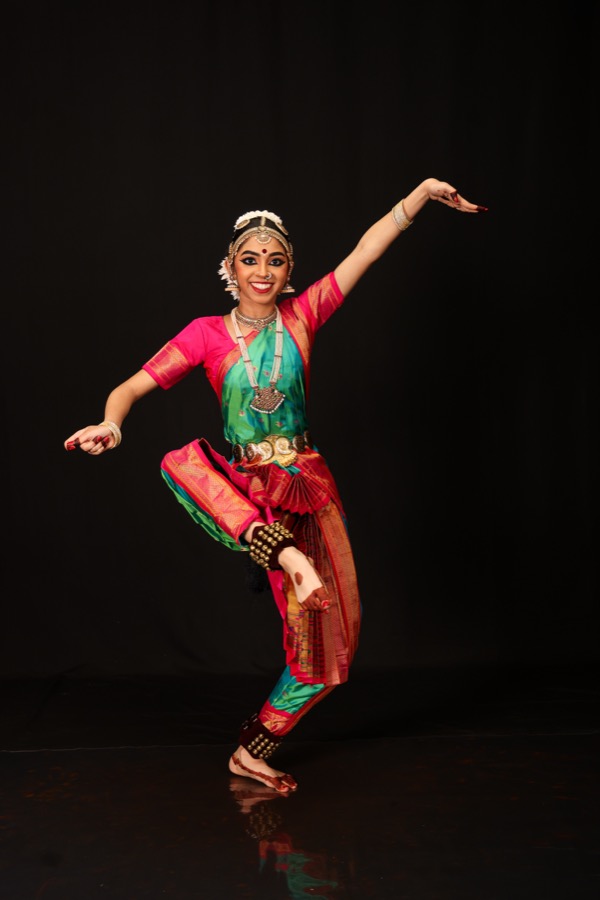
The Pushpanjali is a traditional opening to the Bharatanatyam Arangetram. The dancer invokes the blessings of God through the offering of flowers, and pays tribute to her guru, the orchestra, mother earth and the audience. The dancer performs Namaskaram which starts and ends every dance session with the purpose of paying respects to Lord Nataraja.
This will be followed by a lord Ganesha Bhajan — Ganaraj Rangi Naachato.
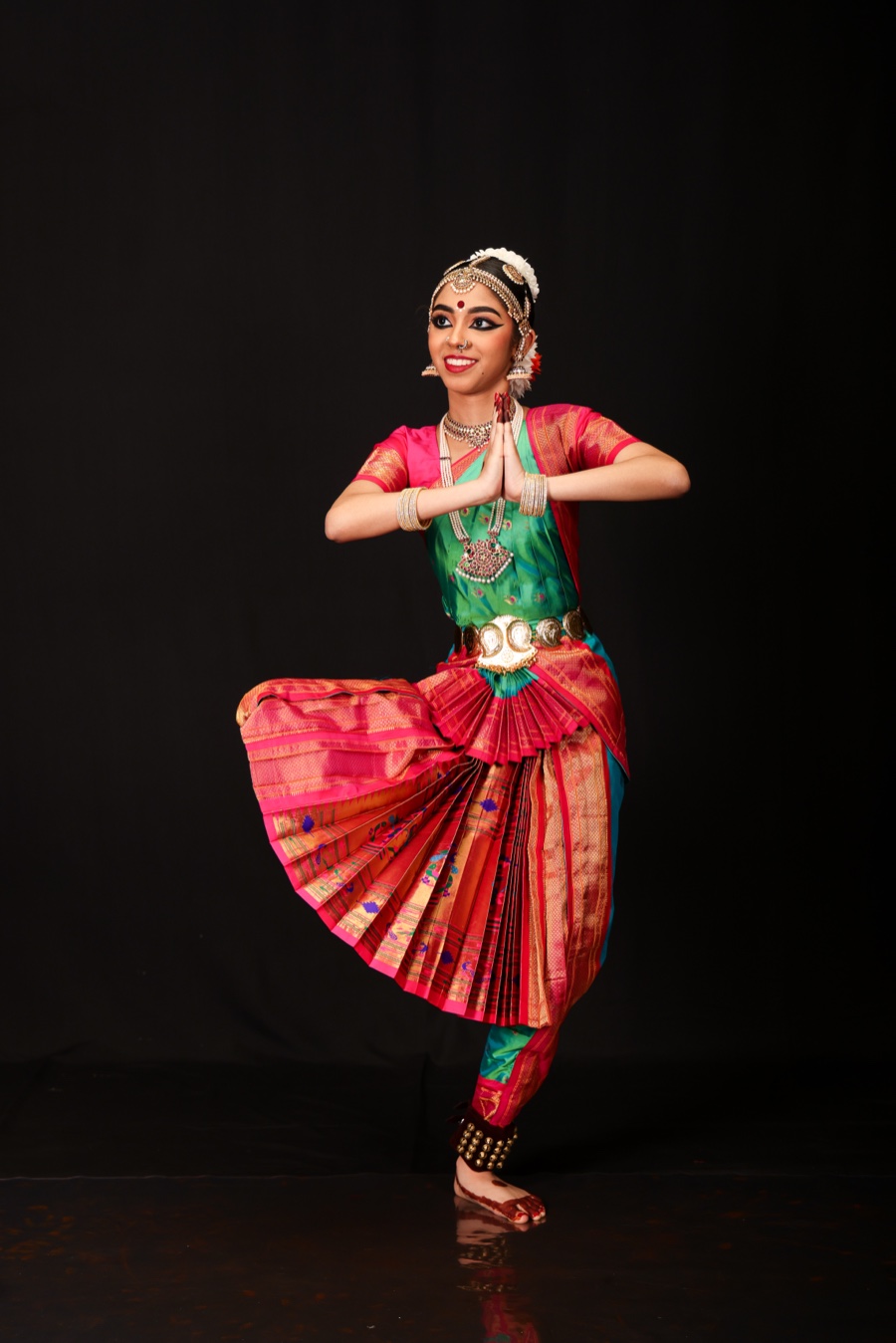
Mallari
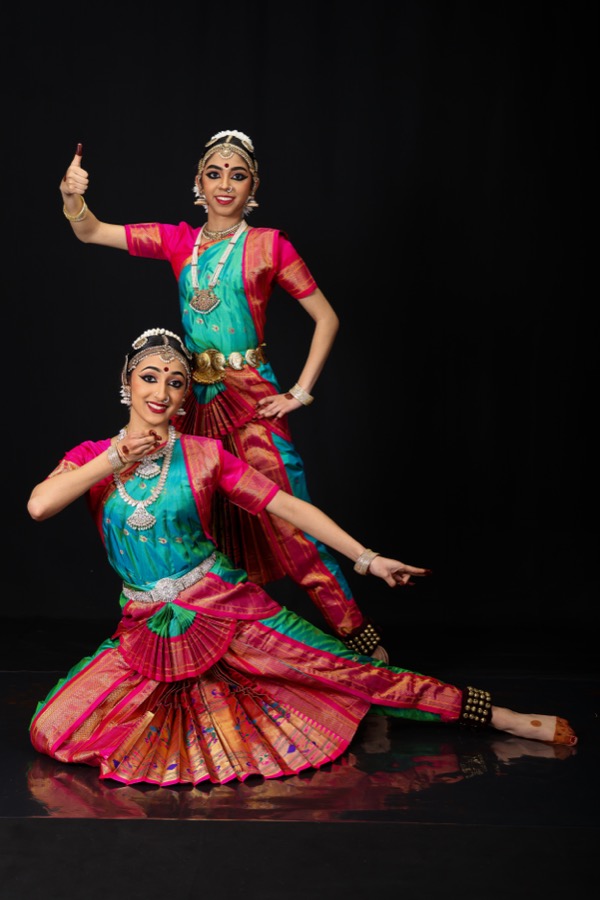
Mallari is a unique piece of music played on nadaswaram when the presiding deity of a temple is taken on a procession in South India. The deity, decorated with jewels and garlands is brought near the temple tower and the nadaswaram artiste plays the music with the thavil. It is a pure dance piece played at three speeds.
Sharada Kautvam: Jaya Sharade Vageeshwari
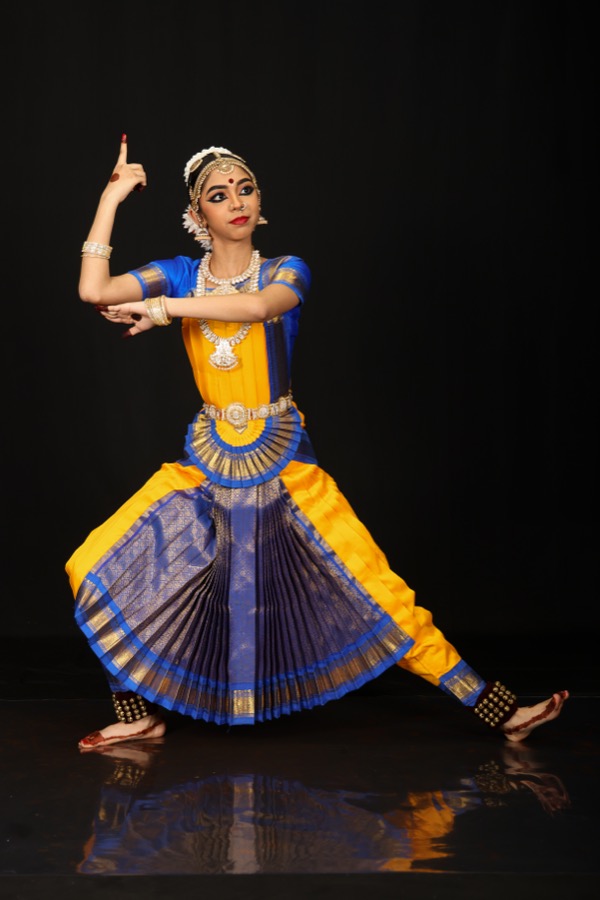
A Kautvam is a dance composition in praise of a Hindu deity. It is offered as a form of prayer or an invocation performed at the commencement of a Bharatanatyam dance recital.
This particular Kautvam is in praise of goddess Saraswati.
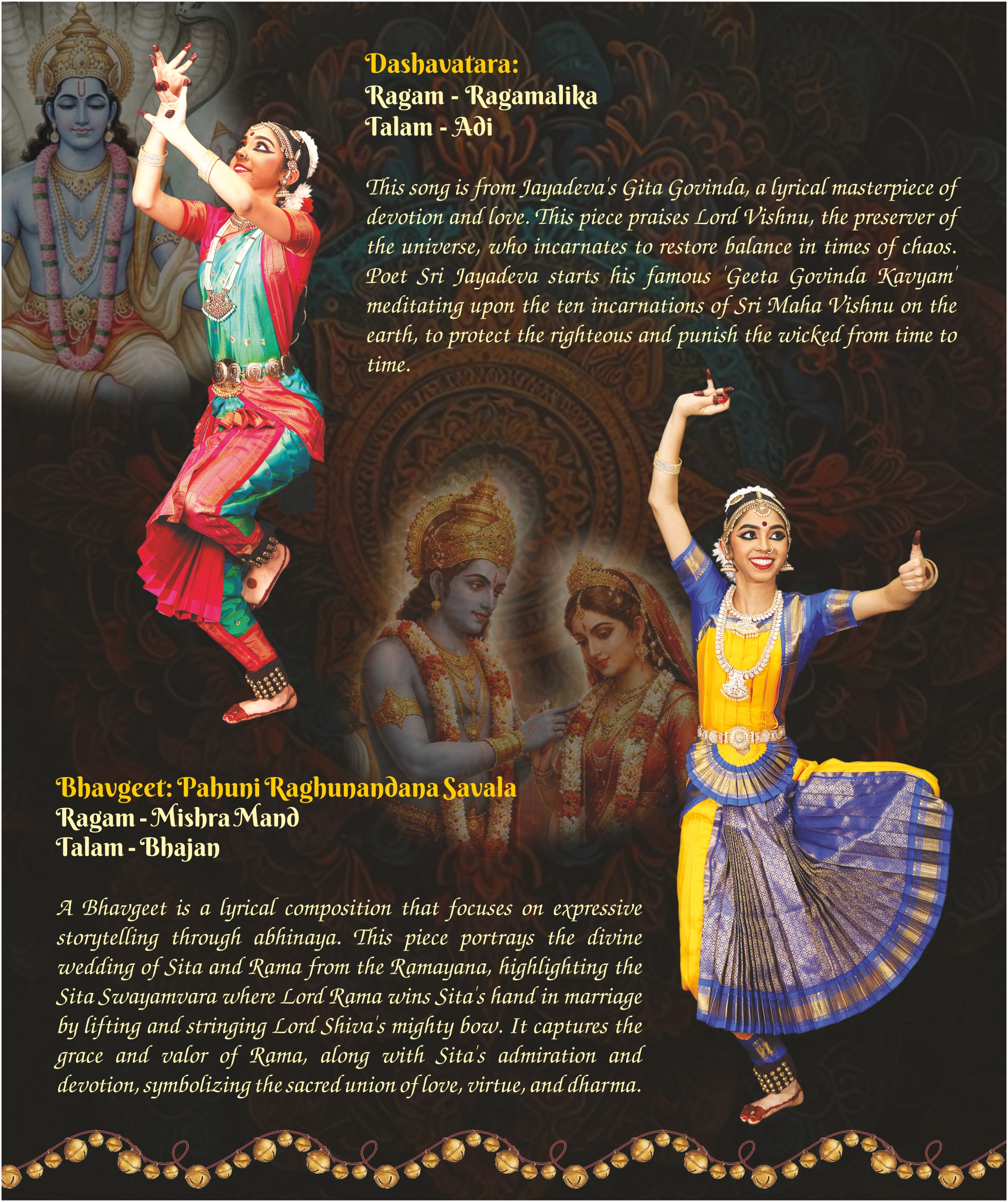
Dashavatara
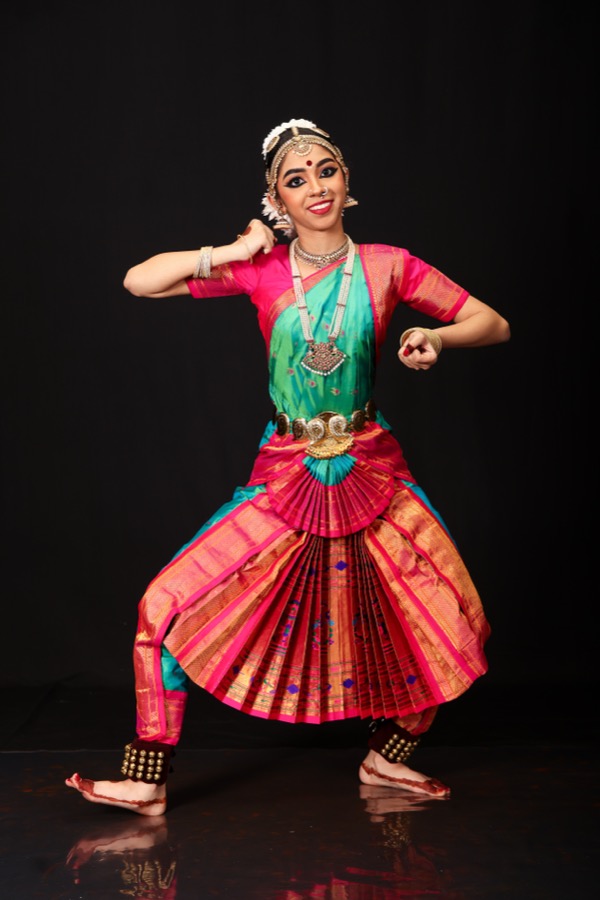
This song is from Jayadeva's Gita Govinda, a lyrical masterpiece of devotion and love. This piece praises Lord Vishnu, the preserver of the universe, who incarnates to restore balance in times of chaos. Poet Sri Jayadeva starts his famous Geeta Govinda Kavyam meditating upon the ten incarnations of Sri Maha Vishnu on the earth, to protect the righteous and punish the wicked from time to time.
The ten incarnations are — Matsya (fish), Kurma (tortoise), Varaha (wild boar), Narasimha (half man half lion), Vamana (dwarf), Parashurama (warrior), Rama (the ideal man), Balarama (Krishna's brother and a cowherd who possessed extraordinary strength), Buddha (the enlightened one) and Kalki (half man half horse).
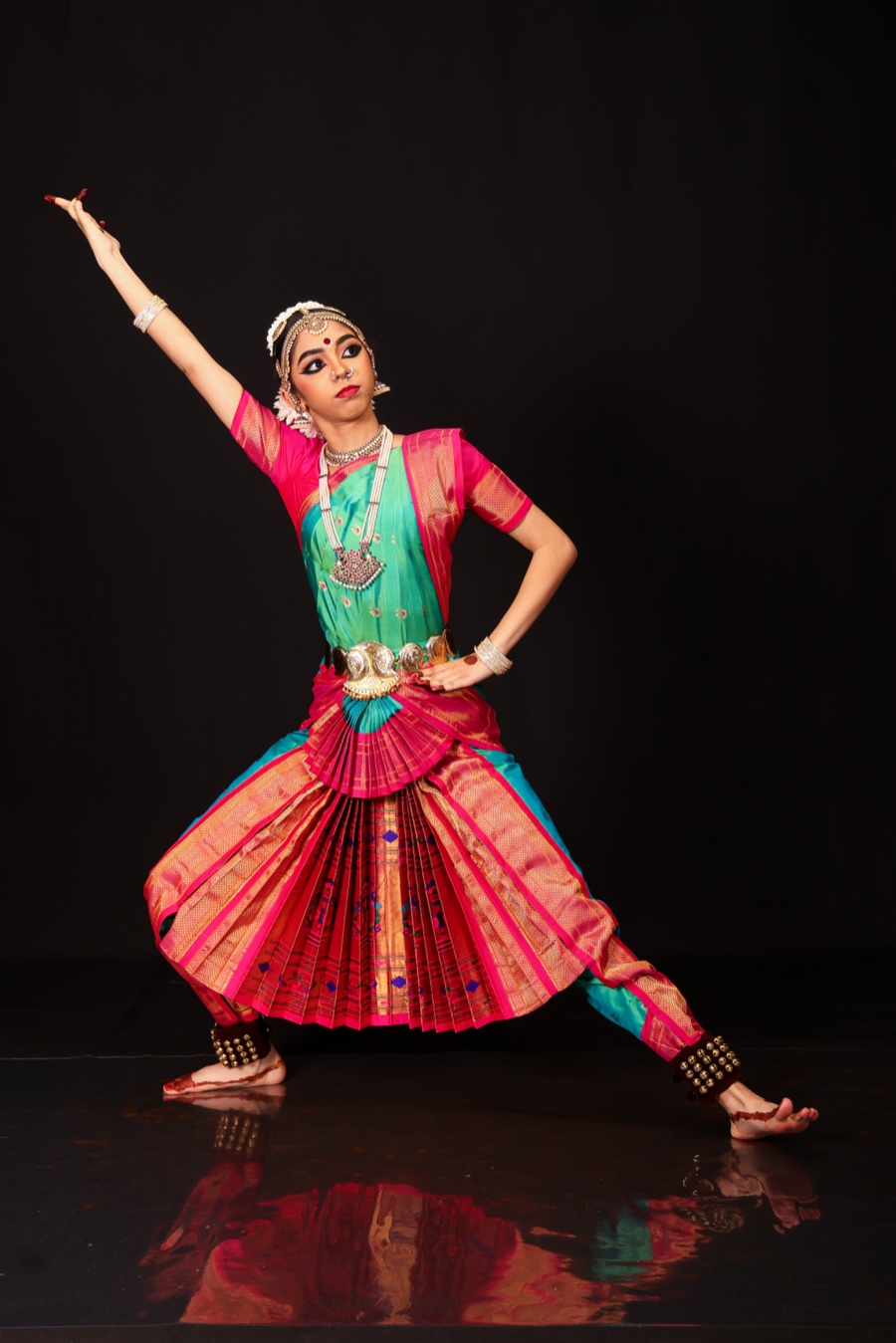
Bhavgeet: Pahuni Raghunandana Savala
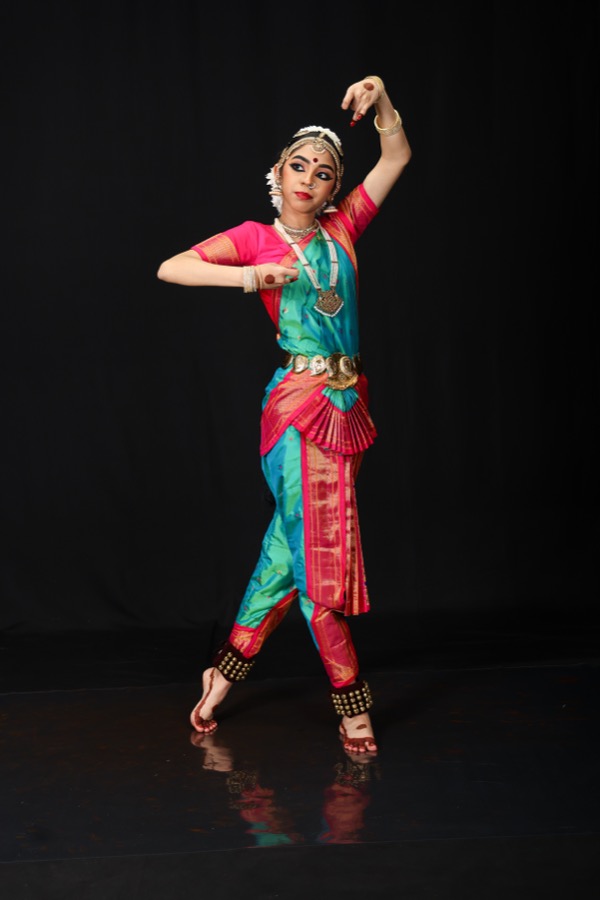
A Bhavgeet is a lyrical composition that focuses on expressive storytelling through abhinaya. This piece portrays the divine wedding of Sita and Rama from the Ramayana, highlighting the Sita Swayamvara where Lord Rama wins Sita's hand in marriage by lifting and stringing Lord Shiva's mighty bow. It captures the grace and valor of Rama, along with Sita's admiration and devotion, symbolizing the sacred union of love, virtue, and dharma.
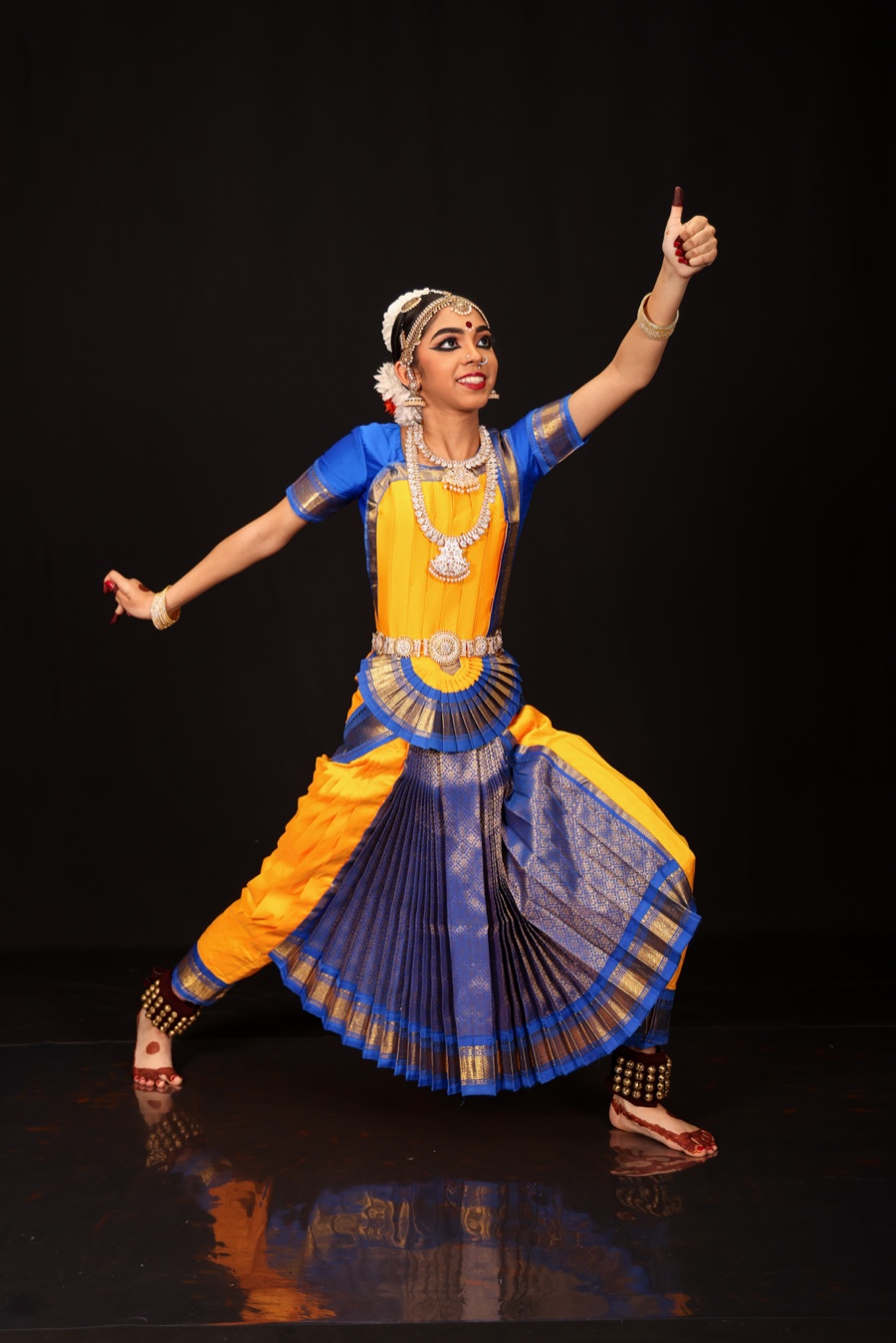
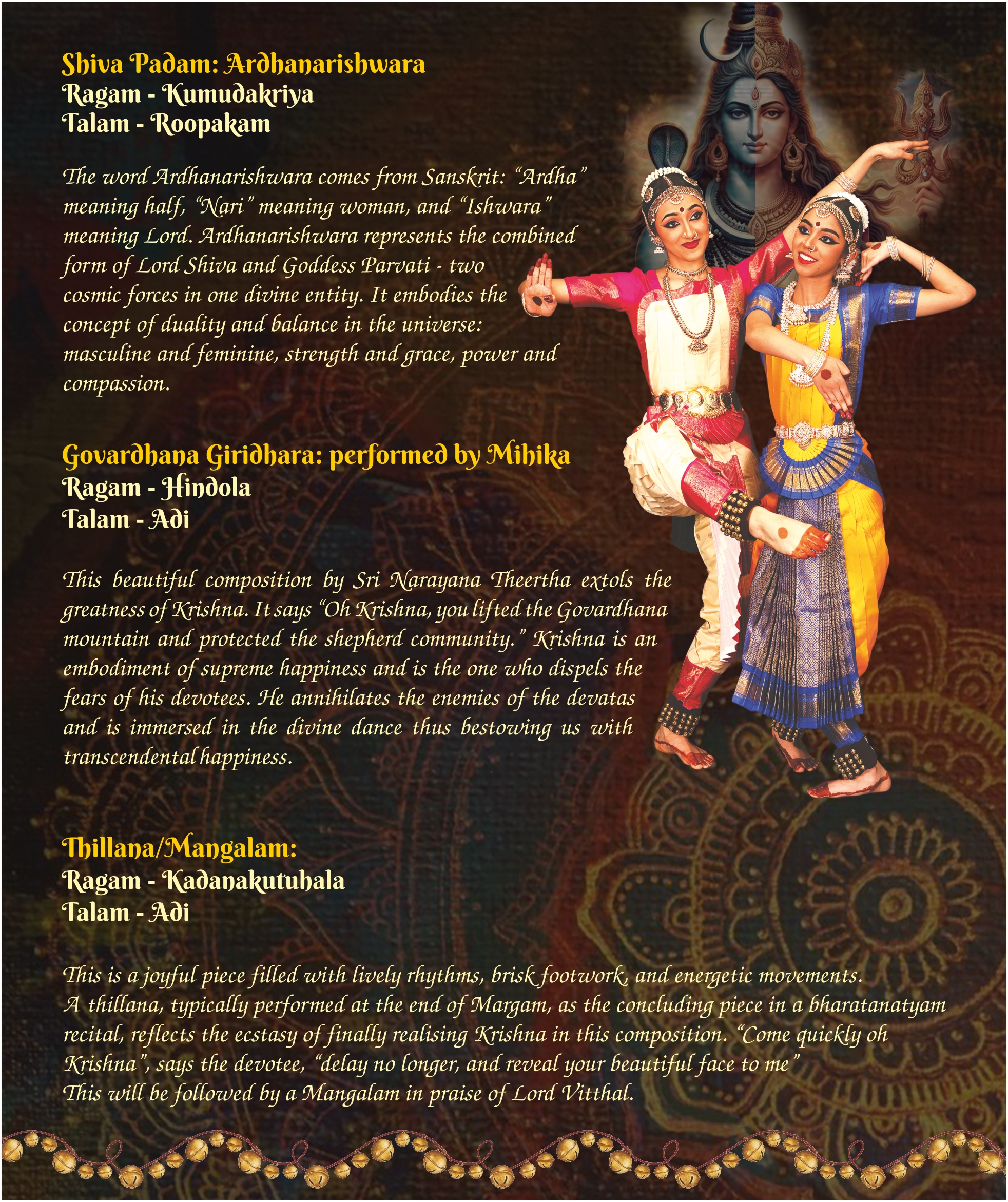
Shiva Padam: Ardhanarishwara
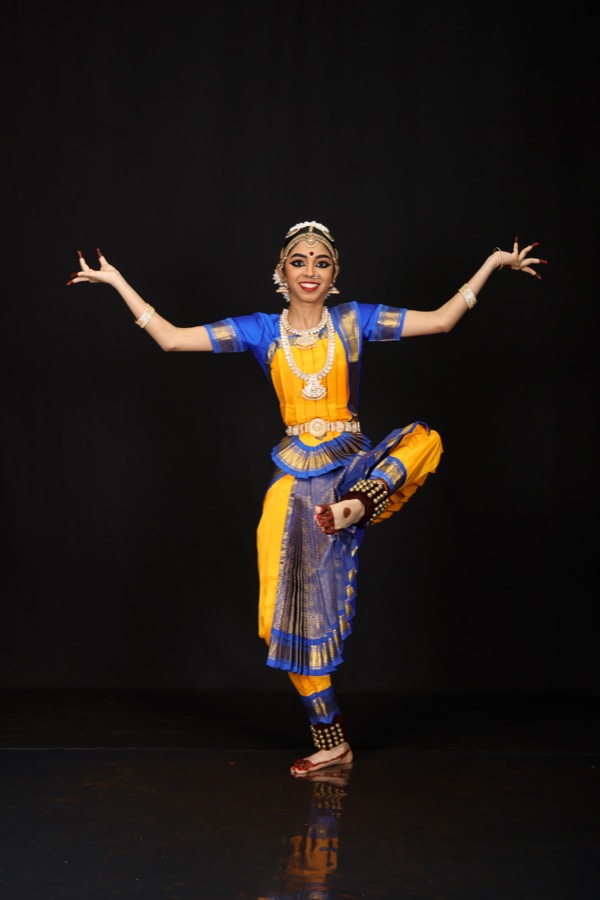
The word Ardhanarishwara comes from Sanskrit: "Ardha" meaning half, "Nari" meaning woman, and "Ishwara" meaning Lord. Ardhanarishwara represents the combined form of Lord Shiva and Goddess Parvati — two cosmic forces in one divine entity. It embodies the concept of duality and balance in the universe: masculine and feminine, strength and grace, power and compassion.
Govardhana Giridhara
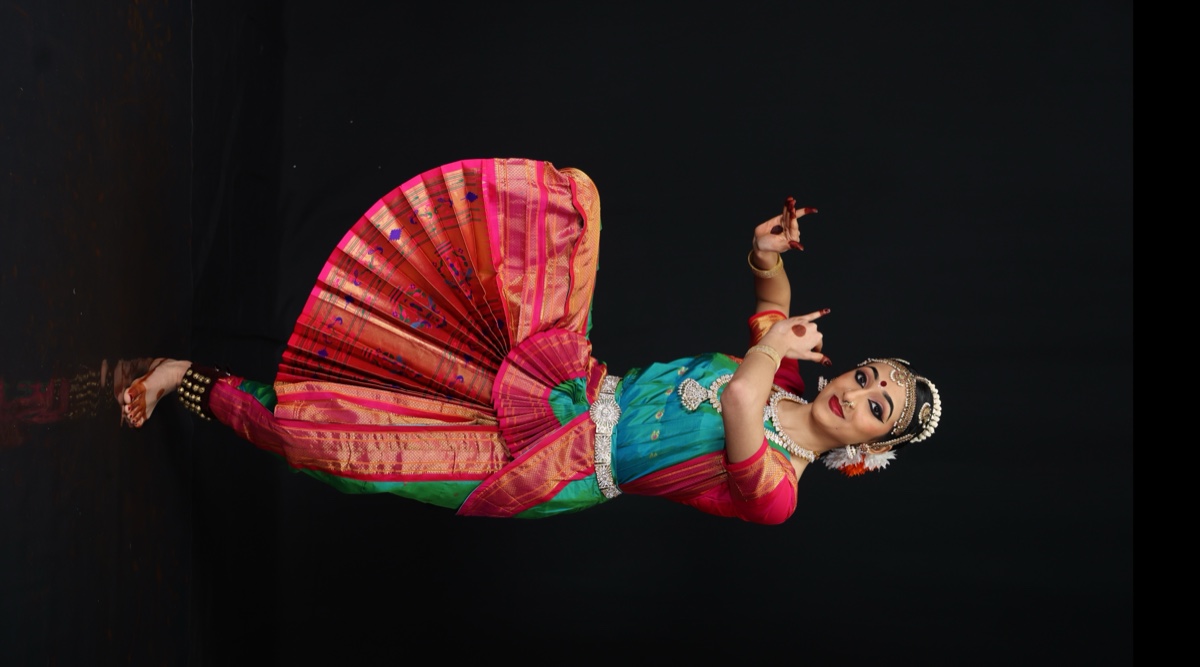
This beautiful composition by Sri Narayana Theertha extols the greatness of Krishna. "Oh Krishna, you lifted the Govardhana mountain and protected the shepherd community." Krishna is an embodiment of supreme happiness and is the one who dispels the fears of his devotees. He annihilates the enemies of the devatas and is immersed in the divine dance thus bestowing us with transcendental happiness.
Thillana & Mangalam
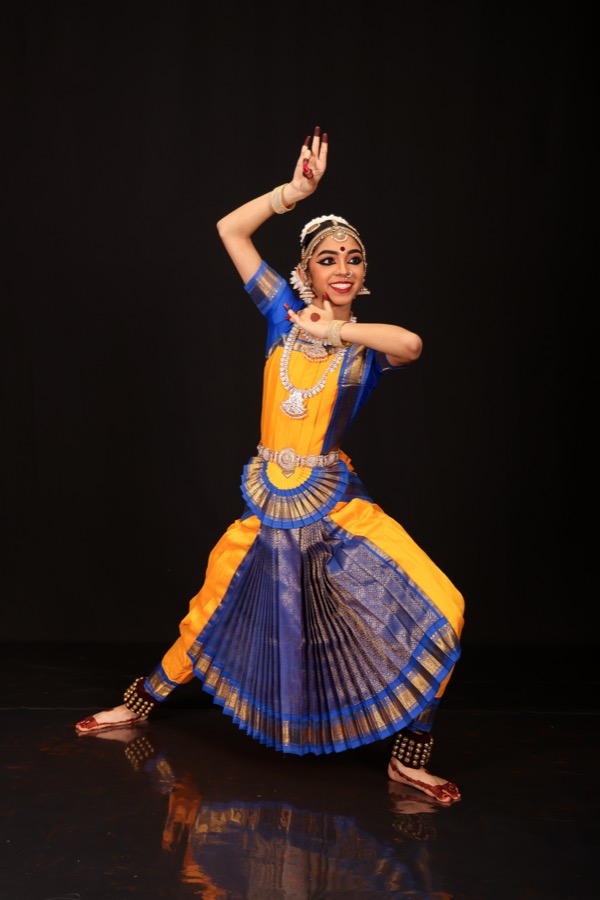
This is a joyful piece filled with lively rhythms, brisk footwork, and energetic movements. A thillana, typically performed at the end of Margam, as the concluding piece in a Bharatanatyam recital reflects the ecstasy of finally realizing Krishna in this composition — "Come quickly oh Krishna, delay no longer, and reveal your beautiful face to me."
This will be followed by a Mangalam in praise of Lord Vitthal.